I am a firm believer that if anyone wants to work, there is a job for everyone.
It’s important that all employees are realistic and honest about their health limitations and as an employer I like to think I am supportive in any way I can.
George is disabled – a heredity neurological disorder. His mobility is impacted. George is just as much valued as anyone else in our team. Employed for over two years, George was primarily employed to care for dad when dad takes a cruise – 5 cruises so far and more planned! This means he’s part of a double up team working in a difficult environment and on call 24/7.
George also supports the rota at home when available.
Reasonable adjustments – a legal requirement.
Many people may think that a disabled person can’t be a personal care assistant for a disabled person. I think differently. Every person in our team brings different strengths and it’s important that everyone recognises the strengths and weaknesses of their team mates.
The Equality Act 2010 requires me to make reasonable adjustments for:
Workers and employees
Self employed persons and contractors, and
Job applicants
I must consider carefully if the adjustment:
- will remove or reduce the disadvantage
- is practical to make
- is affordable, or
- could harm the health and safety of others
The basic nature of the job role does not need to change, although there may be something more practical for one person rather than another.
I do not have to make adjustments that are unreasonable, cost more money than can be provided under NHS CHC funding or where others are put at risk or disadvantage.
First things first – I need to talk to George!
I need to learn from the person affected by a disability; what can you do, what causes difficulty, what causes pain, what makes you feel unsafe. Equally important, asking, what can you do, what makes you feel safe, and how can I support you.
In considering reasonable adjustments for George, I look at his strengths – what can he do that others find difficult. Who is he best working with – even with zero disabilities, not everyone works well with everyone! Working in a double up team requires careful management of the rota’s, ensuring perfect pairings!
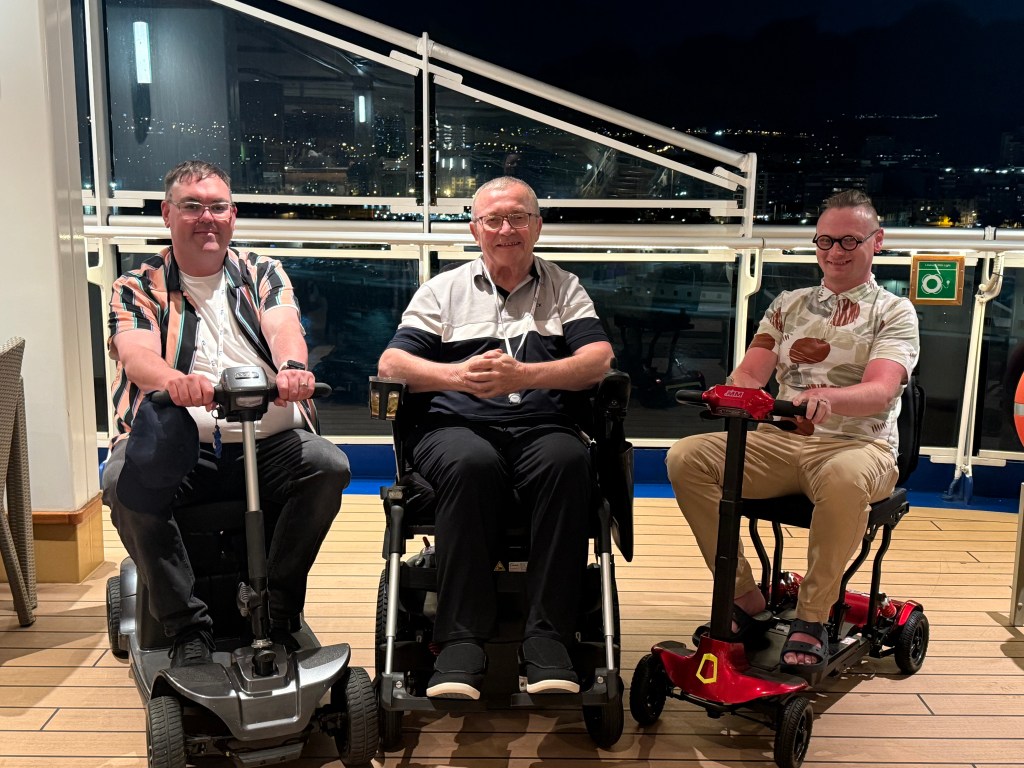
George uses a mobility scooter to get around – he is offered space to park it and a charging point. This means he can provide care and assistance to dad when he accesses the community too.
All moving and handling for dad should be done in the safest way possible for dad and all team members. We have ceiling hoists, height adjustable beds and spacious rooms – all things that make moving and handling easier and safer to manage. George can take rest breaks when he feels he needs to – there is no limit as I fully understand every day can be different. George is in control of his rest breaks. George cannot do any moving and handling on his own, this safeguards George and dad. Working in a double up team, this should never be an issue.
Whilst there are a few things that George cannot do, there are so many things he can do and he does them well and I am super pleased to have offered George an amended contract offering him more hours, not only cruise hours!
This blog was written with George’s consent. George is not the only person in the team where reasonable adjustments are made to accommodate a long term health condition.
George is pictured on his red scooter with dad and Craig. Craig stole my scooter to not feel left out of the wheely good photo!
More information about reasonable adjustments can be found on the ACAS website.
 Daily Life with a C4/C5 Spinal Cord Injury
Leave a comment